Skip to content
Book now

Travel guides

Best Time to Visit Morocco by Campervan: Seasons, Weather and Best Routes

Spring, summer, autumn or winter: temperatures by region, rainfall, Ramadan and the best road trip routes for each season in Morocco by campervan.

Morocco is a year-round destination, but not in the same way in every season: within a few hours' drive of Marrakech, you go from a mild Atlantic coast to the snowy passes of the Atlas, and on to the edge of the desert, where temperature swings are extreme. On a campervan road trip, choosing the right time is mostly about choosing the right route. Here is our guide, with reliable average temperatures, to help you decide when to go and where.
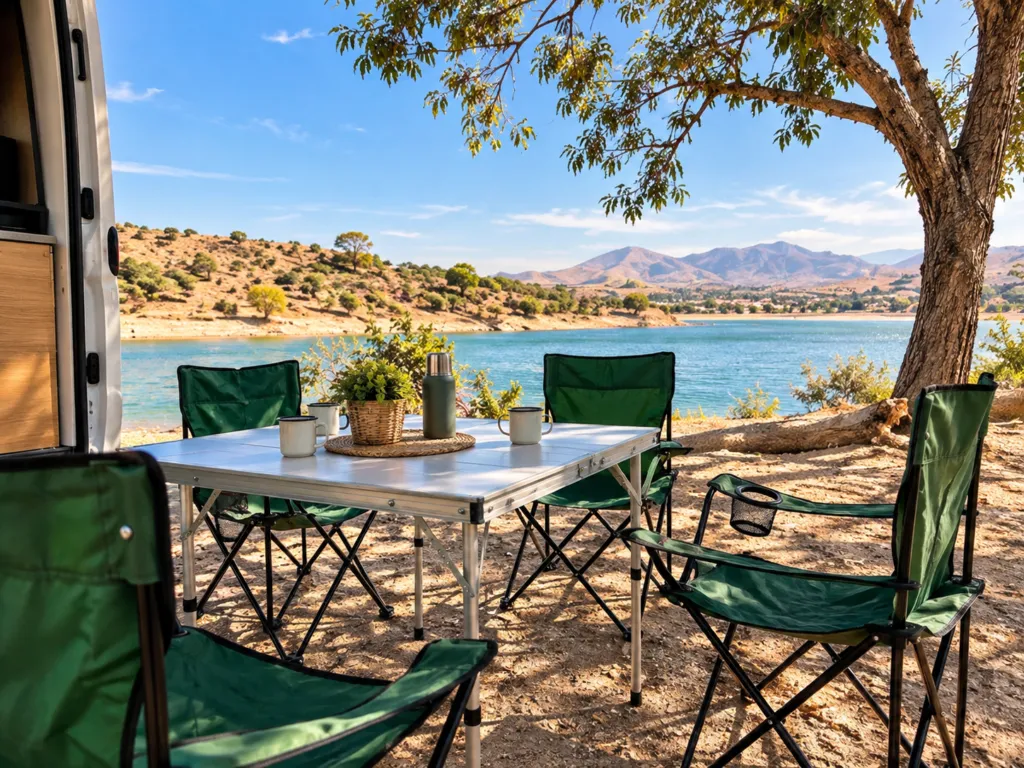
Camping table and chairs next to the van by a lake

The short answer

  • The best times for a full road trip (coast, Atlas and desert): spring (March to May) and autumn (late September to November).
  • In winter (December to February): sunshine and mild days on the coast and in the south, but cold nights in the Atlas and on the edge of the desert. It is the favourite season of van travellers escaping the European winter.
  • In summer (June to August): very hot inland. Head for the Atlantic coast, which is cooler and windier.
  • Check before booking: the dates of Ramadan and European school holidays, which change the atmosphere and how busy it gets.

Morocco's climate at a glance

Morocco does not have one climate, but several. Here are the average temperatures (daily highs and lows) for the main stops on a road trip from Marrakech:

  • Marrakech: about 19 °C by day and 6 °C at night in January, 26 °C and 12 °C in April, 38 °C and 21 °C in July, 28 °C and 16 °C in October.
  • Essaouira (Atlantic coast): a very steady climate, around 18 °C by day in January and 22 °C in July, with mild nights all year. It almost never rains from June to September.
  • Agadir (southern coast): about 21 °C by day in January and 27 °C in July.
  • Ouarzazate (south of the Atlas): about 17 °C by day but 2 °C at night in January, and nearly 39 °C by day in July.
  • Merzouga area (reference: Errachidia): about 16 °C by day and 2 °C at night in January, nearly 40 °C by day in July.

Key point: the further you are from the ocean, the bigger the difference between day and night, and between summer and winter. Rainfall is light and mostly falls from autumn to spring.

Spring (March to May): the ideal season

This is the most pleasant time to combine every region. Days are warm but not too hot in Marrakech (24 to 29 °C on average), the Atlas valleys turn green and desert nights get milder.

  • Highlights: pleasant weather everywhere, green mountain landscapes, ideal for a long route to the desert.
  • Good to know: in May, the heat is already building in the south. It is also the month of the Rose Festival in Kelaat M'Gouna, in the Dades valley, whose dates vary each year with the harvest. The Easter holidays bring more European travellers.
  • Our route: a grand loop from Marrakech through the Atlas, the Dades and Todra valleys and the desert, returning via the coast if you have time.

Summer (June to August): head for the ocean

Inland, the heat is intense: over 37 °C on average in the afternoon in Marrakech in July and August, and nearly 40 °C on the edge of the desert. The Atlantic coast stays cool: in Essaouira, highs are around 22 °C.

  • Highlights: a pleasant, dry coast, small waves that are ideal for learning to surf, long days.
  • Good to know: the wind blows hard on the coast, especially around Essaouira, which is famous for kitesurfing. Beaches are busier during the summer holidays. Avoid the desert in midsummer, and don't stay in the van parked in full sun during the hottest hours.
  • Our route: Marrakech – Essaouira – Imsouane – Taghazout – Agadir, driving early in the morning. Take inspiration from our Marrakech to Essaouira road trip and Morocco surf trip guides.

Autumn (September to November): the best compromise

After the summer heat, autumn brings back very pleasant weather: about 28 °C by day in Marrakech in October and 23 °C in November. September is still hot inland.

  • Highlights: mild temperatures, beautiful light, the waves return to the coast, fewer people than in spring.
  • Good to know: the first rains return to the coast from October, especially in November. Nights become cool again in the Atlas and in the desert.
  • Our route: every option is open. It is the ideal season for a full 10- to 15-day route, from the ocean to the desert.

Winter (December to February): mild coast, cold southern nights

The Moroccan winter is nothing like the European one: it is often 18 to 21 °C in the afternoon on the coast and in Marrakech, under clear skies. But nights are cold: around 6 °C in Marrakech and close to 0 °C in Ouarzazate and on the edge of the desert.

  • Highlights: sunshine while Europe shivers, the big-wave season for experienced surfers, perfect sightseeing weather.
  • Good to know: snow can temporarily close the Atlas passes, including the Tizi n'Tichka (2,260 m) on the road to Ouarzazate, usually between late November and early March. Check road conditions before setting off and avoid driving right after heavy snowfall. The coast between Essaouira and Agadir is very popular with European motorhome travellers: arrive at campsites early.
  • Our route: the Atlantic coast, from Marrakech to Essaouira and on towards Agadir, plus the desert for travellers well equipped for cold nights.

Month by month: our summary

  • January: the coolest month. Mild on the coast, cold nights inland, possible snow in the Atlas.
  • February: still cool at night, sunny days. In 2027, Ramadan is expected to start in early February.
  • March: spring arrives. A very good month for the coast and Marrakech; in 2027, Ramadan is expected to end in early March.
  • April: one of the best months for the whole country.
  • May: excellent, but already hot in the south. Rose Festival in the Dades valley.
  • June: the heat builds inland. Favour the coast and the Atlas.
  • July and August: very hot inland, ideal on the coast, strong wind in Essaouira.
  • September: still hot inland, very pleasant on the coast.
  • October: one of the best months for a full route.
  • November: mild, with more rain on the coast and cool nights.
  • December: mild days, cold nights. The festive season brings many travellers.

Ramadan: should you avoid it?

Not necessarily. During the month of Ramadan, Muslims fast from sunrise to sunset. For travellers, this mainly means different opening hours during the day, some restaurants closed at lunchtime outside tourist areas, and heavier traffic just before the fast is broken at sunset. The evenings, on the other hand, are very lively.

In 2027, Ramadan is expected to start around 8 February and end in early March. The exact dates are announced by the Moroccan religious authorities after the moon is sighted: check them before you travel. Out of respect, avoid eating, drinking or smoking openly in the street during the day.

Which route for which season?

  • Spring and autumn: the full route, from the ocean to the desert, in 10 to 15 days.
  • Summer: the Atlantic coast, in 4 to 8 days.
  • Winter: the coast first, and the desert if you don't mind cold nights.

Find our detailed 4-, 10- and 15-day routes in our road trip ideas from Marrakech, and our road tips in the guide to driving in Morocco by campervan.

What to pack for each season

  • All year: sunscreen, sunglasses, a hat, a warm jacket for the evenings and clothes covering shoulders and knees for visiting villages and medinas.
  • In winter: a proper fleece or down jacket, warm clothes for the night and a hat for the desert and the Atlas.
  • In summer: light, loose clothes, plenty of water and a windbreaker for the coast.
  • For surfing: a wetsuit, as the water stays cool all year.

Bedding and kitchen equipment are provided in the van: discover it on our campervan page and in our guide to campervan hire in Marrakech.

Sources

  • Temperatures and rainfall: NOAA 1991–2020 climate normals, from the climate tables for Marrakesh, Essaouira, Agadir, Ouarzazate and Errachidia, consulted in October 2026. These are averages: actual weather can vary from year to year.
  • Ramadan 2027: provisional date, to be confirmed by the official announcement of the Moroccan authorities.
  • Tizi n'Tichka pass: temporary snow closures reported by Hespress in January 2026.

FAQ

Frequently asked questions

When is the best time to visit Morocco by campervan?

Spring (March to May) and autumn (late September to November) are the best times for a full road trip, from the coast to the desert. Winter suits the coast very well, and summer is best spent on the Atlantic coast.

Is Morocco cold in winter?

Days are mild and sunny, often 18 to 21 °C in Marrakech and on the coast. Nights are cool to cold: around 6 °C in Marrakech and close to 0 °C in Ouarzazate and on the edge of the desert.

Can I go to the desert in summer?

It is not recommended: average afternoon temperatures approach 40 °C on the edge of the desert in July and August. Favour the coast in summer and keep the desert for spring, autumn or winter.

Are the Atlas roads open in winter?

Yes, most of the time, but snow can temporarily close some passes, such as the Tizi n'Tichka, usually between late November and early March. Check road conditions before setting off.

When is Ramadan in 2027?

It is expected to start around 8 February 2027 and end in early March. The exact dates are confirmed by the Moroccan authorities after the moon is sighted.

Is the weather good in Essaouira in summer?

Yes, it is mild (around 22 °C in the afternoon) and almost dry, but the wind is often strong. It is ideal for escaping the heat inland.

Ready to hit the road?

Book your campervan direct from Marrakech: €110 per night, mileage and insurance included. The total price is shown as soon as you choose your dates.

Any question? Message us on WhatsApp